Launch offer ends in 23:59:59

UK PPL(A) Theory: All Nine Papers, One Concept per Page With Every Concept Drawn Step by Step!

Airspace, met, altimeter settings, mass and balance, the wind triangle: in your manual they're pages of text. Here each topic fits on one page, with the drawing and the numbers you need to remember. 66 drawn pages.

SHOW ME THE DRAWN PAGES

🔒 Secure checkout · PDF by email · 30-day guarantee

One topic per pagethe drawing shows you the rule and the text goes with it
66 drawn pages11 parts, from the nine papers on one map to exam day
Up-to-date sourcesCAA Skyway Code (CAP 1535), CAP 413 and Standards Document 11

This Is What the Pages You Will Study Look Like

One topic per page, the drawing that shows you how it works and the boxes with what you need to know:

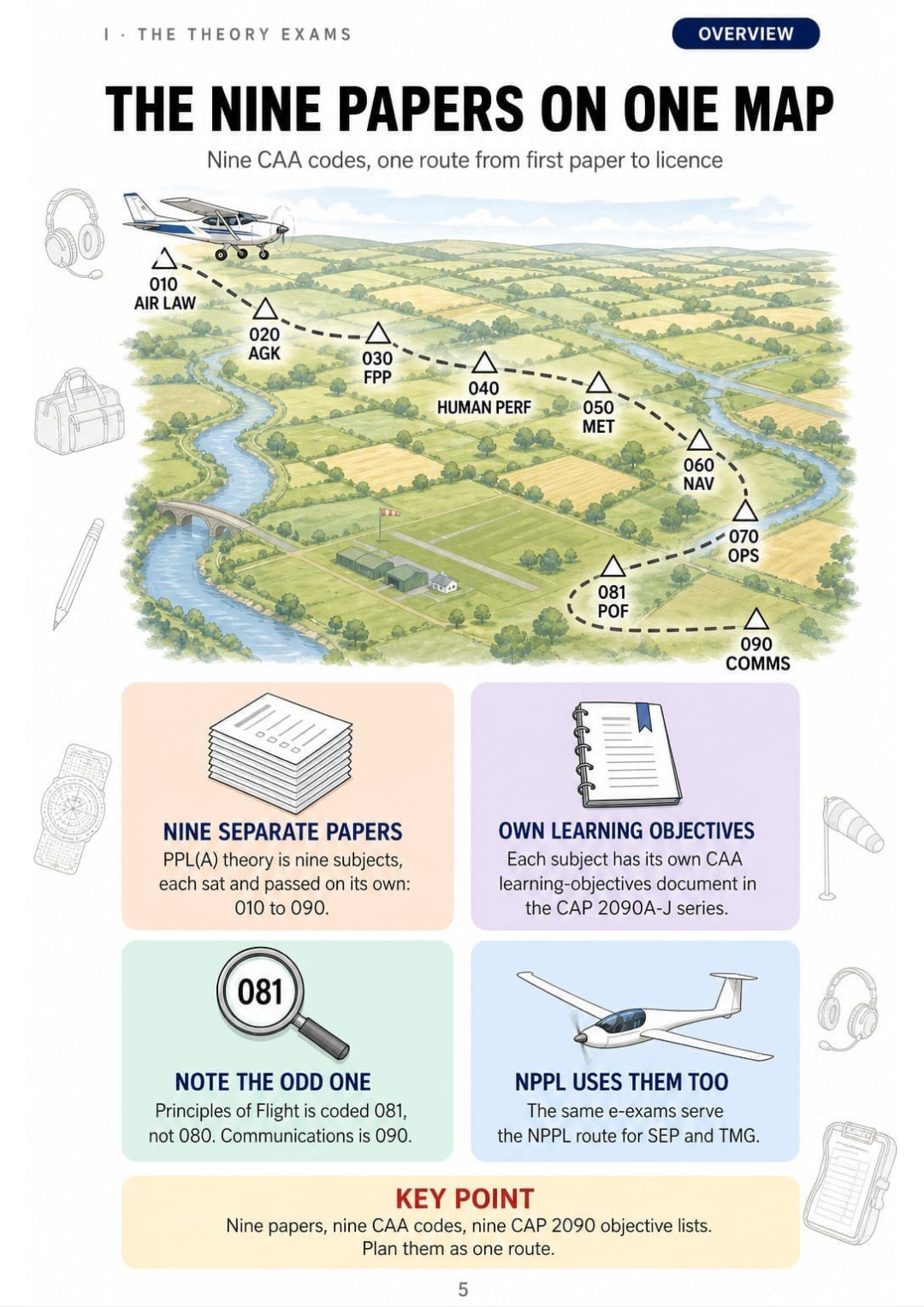
010 Air Law to 090 Communications: the nine PPL(A) papers and their CAA codes on one map
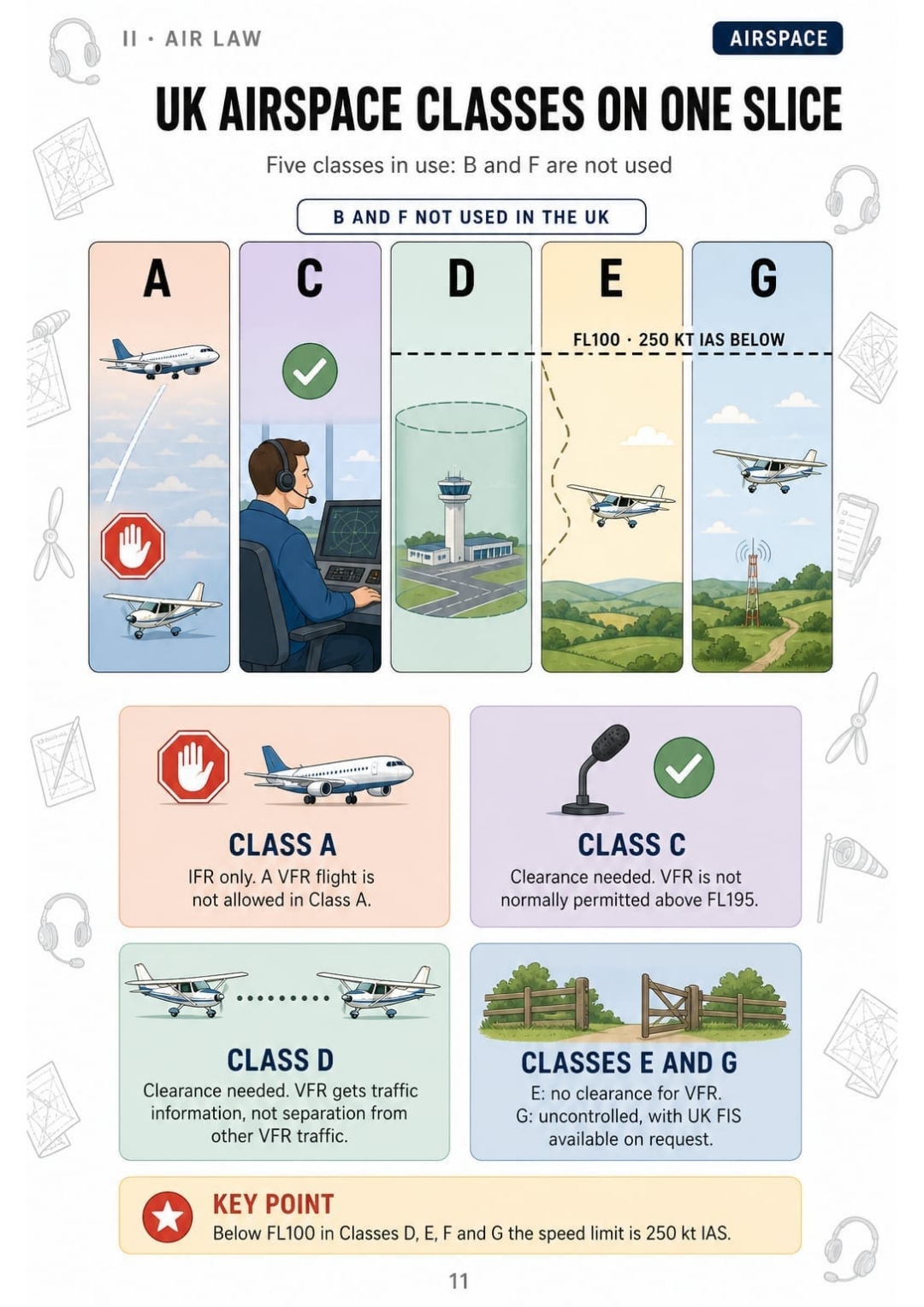
A, C, D, E and G in one slice: who needs a clearance, and the 250 kt limit below FL100.
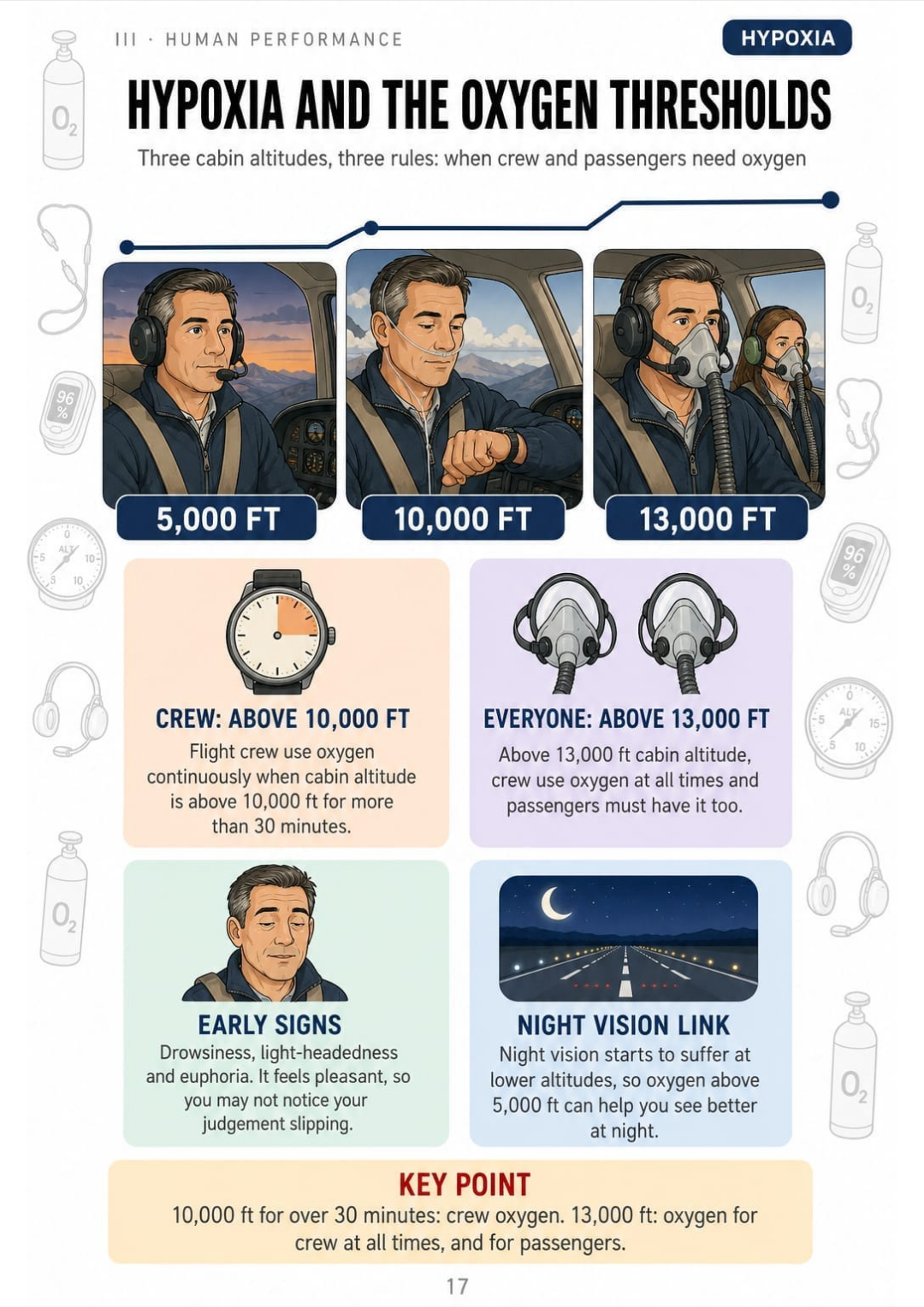
Crew oxygen above 10,000 ft for over 30 min, and for everyone above 13,000 ft
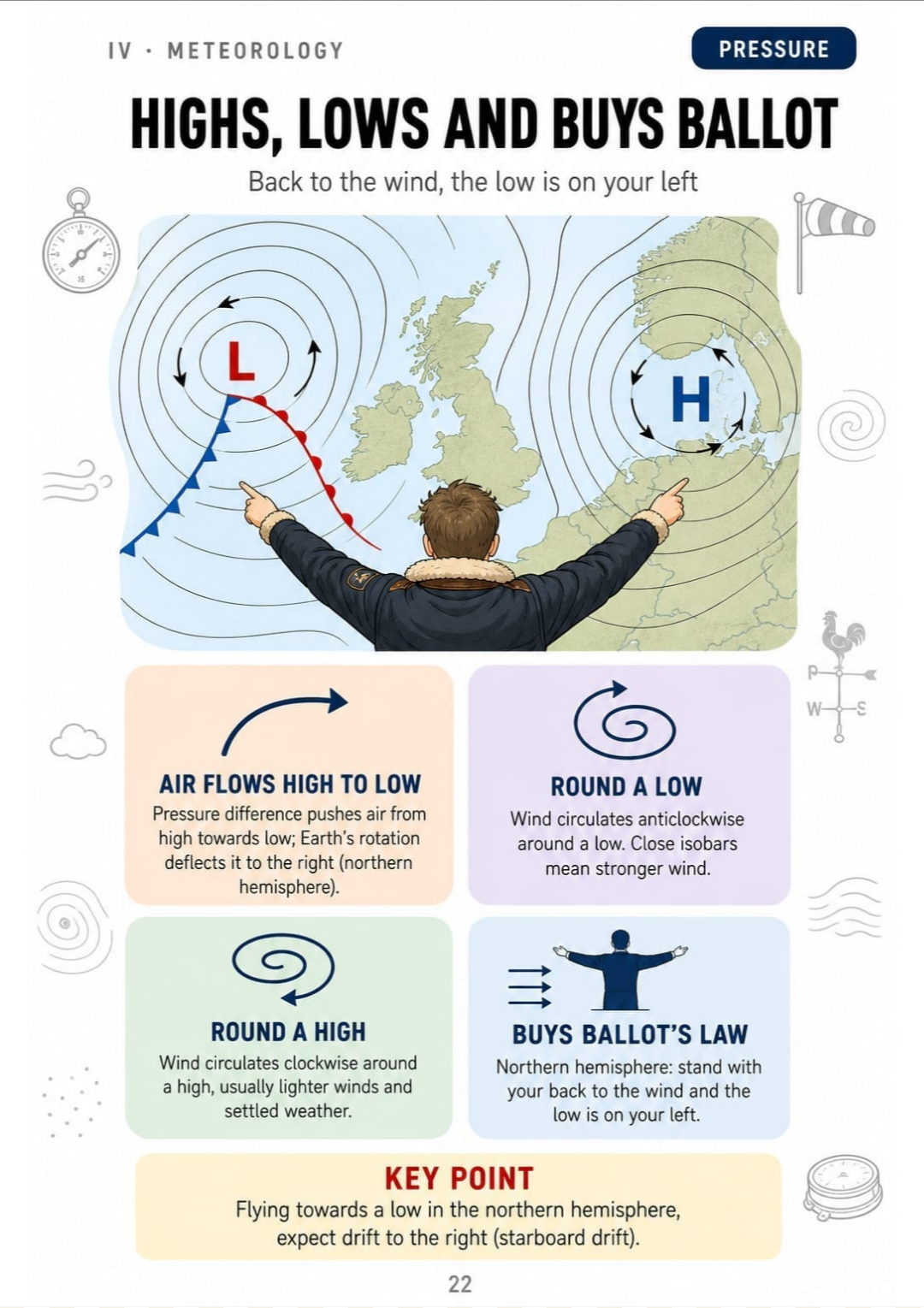
Anticlockwise round a low, clockwise round a high, and Buys Ballot drawn as a person.
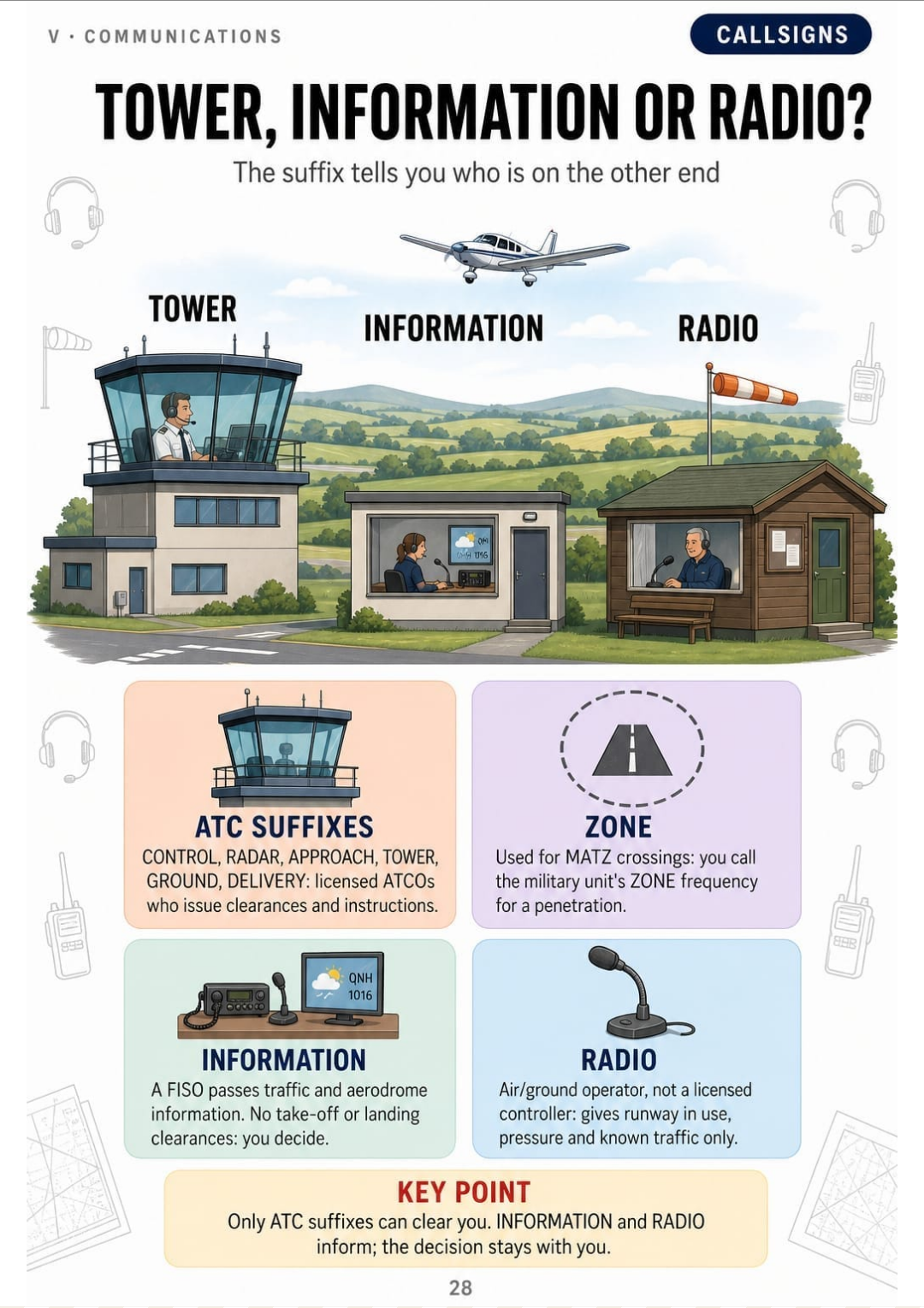
TOWER clears, INFORMATION informs, RADIO is air/ground: three aerodromes drawn side by side.
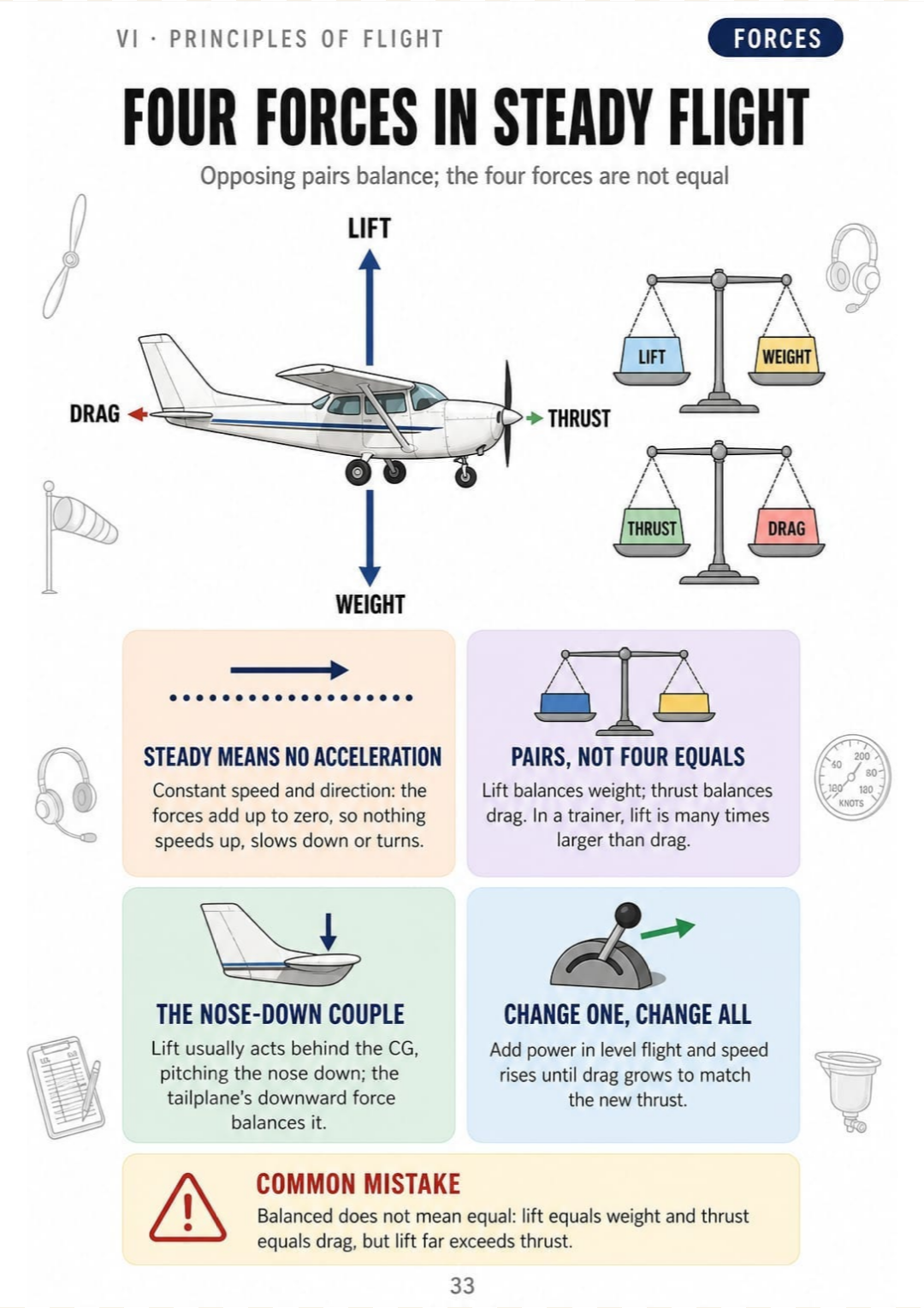
Lift balances weight, thrust balances drag: two pairs on two scales.
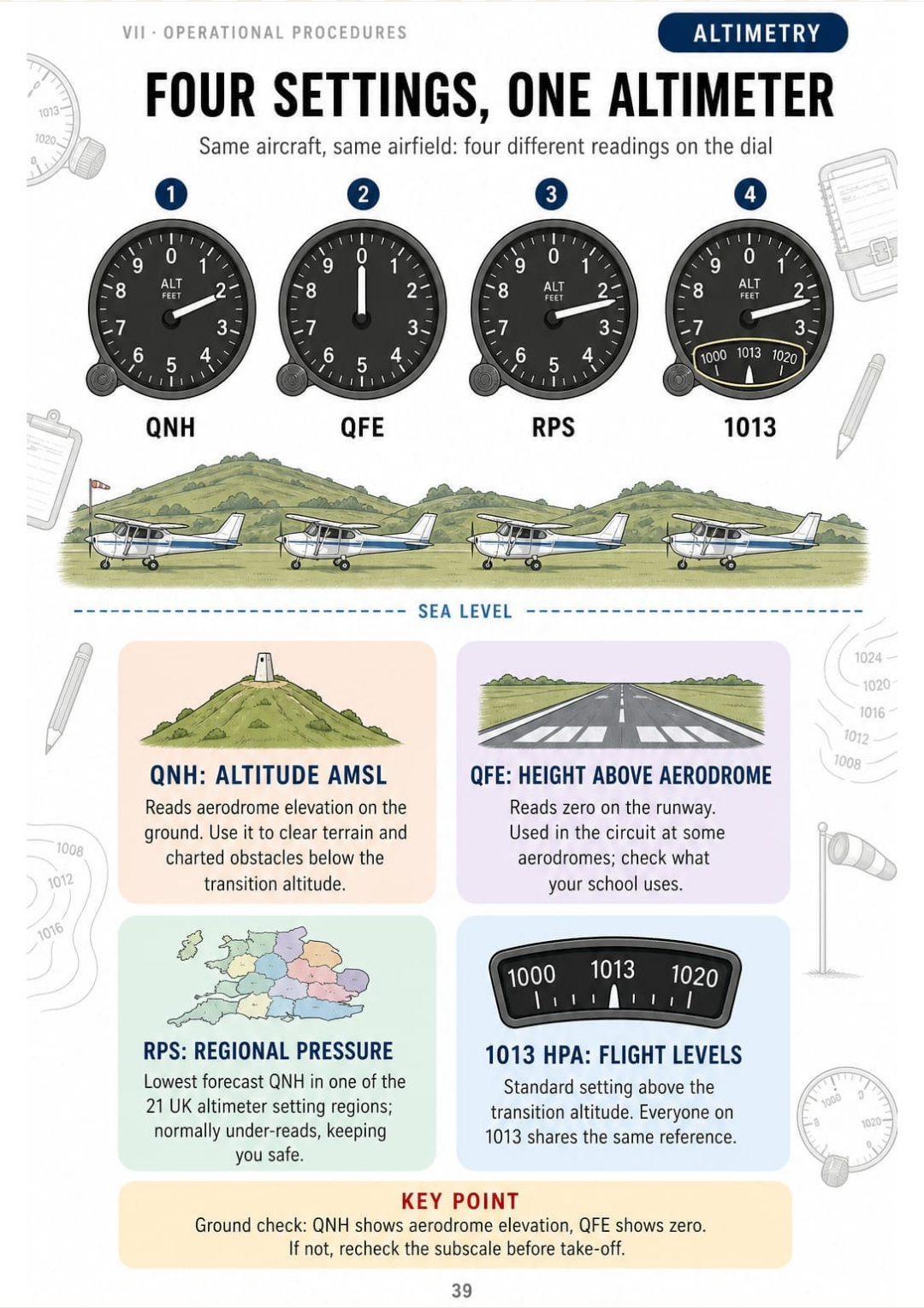
QNH = altitude AMSL · QFE = height (zero on the ground) · RPS = lowest forecast QNH · 1013 = flight levels
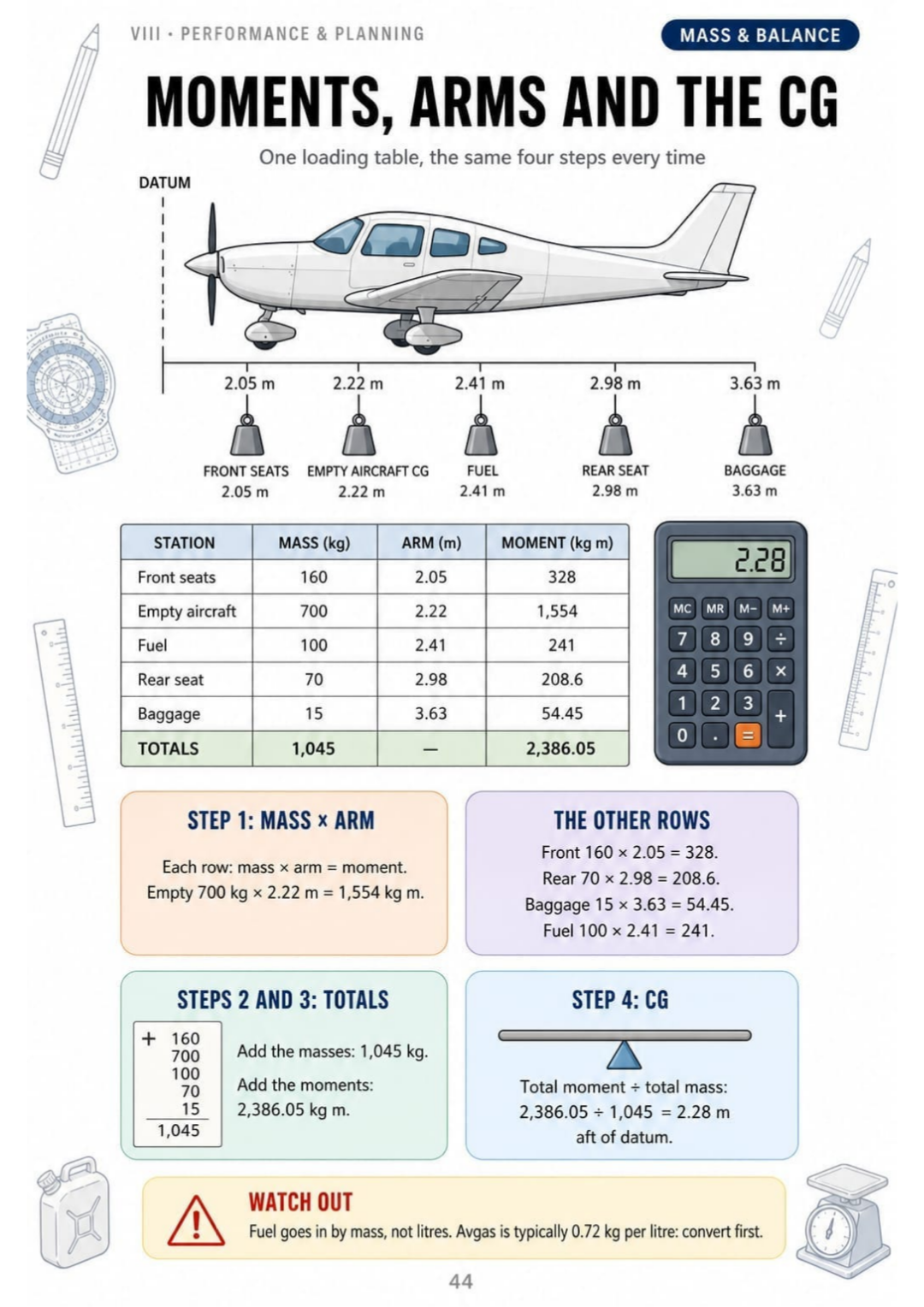
1,045 kg and 2,386.05 kg m give a CG of 2.28 m aft of datum

Swipe to see more →

These are real pages from the book. The table of contents is the full one: 11 parts and 62 topics.

It's Not That You Can't Remember. It's That Nobody Put It in Order.

You've read the oxygen rules for Human Performance three times. You close the manual...

...and you're no longer sure which height goes with what: 10,000 ft or 13,000 ft, 30 minutes or none at all. It was just lines of text.

Crew oxygen above 10,000 ft for over 30 min, and for everyone above 13,000 ft

Here hypoxia is one page, drawn as a climb: the line at 10,000 ft where the crew need oxygen after 30 minutes, and the line at 13,000 ft where everyone on board does.

And on the pages next to it, every topic has its own: the airspace classes, the altimeter settings, the wind triangle, the 1-in-60 rule and mass and balance.

First you understand why the rule is there. Then the numbers stay with you on their own.

SEE THE DIFFERENCE

Stop memorising rules you can't picture:

THIS
  • Pages and pages of dense text
  • The diagram in one place, the rule buried in a paragraph somewhere else
  • In the exam, you don't know where to start
FOR THIS
  • Every rule drawn
  • One topic per page, with the rules in boxes
  • You remember it because you've seen it
A, C, D, E and G in one slice: who needs a clearance, and the 250 kt limit below FL100.
CONTENTS

Take a Look at the 11 Parts and 62 Topics

The exams, air law, human performance, meteorology, communications, principles of flight, operational procedures, flight performance and planning, aircraft general knowledge, navigation, and review and exam day: 66 pages, all drawn

IThe UK PPL Theory Exams · pp. 5-10
  1. The Nine Papers on One Map
  2. Booking a CAA e-Exam Through Your School
  3. The 75% Pass Mark and Exam-Day Kit
  4. The 18-Month Window and 24-Month Validity
  5. Four Attempts Per Paper and What Changes Next
  6. How to Use This Book
IIAir Law · pp. 11-16
  1. UK Airspace Classes A, C, D, E and G
  2. VMC Minima by Altitude Band
  3. Special VFR and VFR at Night
  4. Rights of Way in the Air and on the Ground
  5. The 500 ft and 1,000 ft Low Flying Rules
  6. ATZs, Licence Privileges and Passenger Currency
IIIHuman Performance · pp. 17-21
  1. Hypoxia and the Oxygen Thresholds
  2. Vision, Lookout and Visual Illusions
  3. Spatial Disorientation and the Inner Ear
  4. I AM SAFE: Alcohol, Sleep and Medication
  5. Threat and Error Management in a Loop
IVMeteorology · pp. 22-27
  1. Pressure Systems and Buys Ballot's Law
  2. Surface Wind Versus the Wind at 2,000 ft
  3. Lapse Rates, Stability and Cloud Base
  4. Air Masses and the Warm Front Cross-Section
  5. Radiation, Advection and Upslope Fog
  6. Reading a METAR and a TAF Line by Line
VCommunications · pp. 28-32
  1. Station Callsigns: Tower, Information, Radio
  2. The Freecall and a Basic Service Request
  3. Basic, Traffic, Deconfliction, Procedural
  4. What Must Be Read Back
  5. MAYDAY and PAN on 121.5 MHz
VIPrinciples of Flight · pp. 33-38
  1. Four Forces in Steady Flight
  2. Lift and the Angle of Attack
  3. The Stall at the Critical Angle
  4. Load Factor and Bank Angle
  5. Stability on Three Axes
  6. Flaps and the Spin Entry
VIIOperational Procedures · pp. 39-43
  1. Altimeter Settings: QNH, QFE, RPS, 1013
  2. Transition Altitude and Flight Levels
  3. Transponder Codes 7000, 7700, 7600, 7500
  4. Engine Failure and the Constant-Aspect Field
  5. Lost, Radio Failure and Electrical Failure
VIIIFlight Performance and Planning · pp. 44-49
  1. Moments, Arms and the CG Calculation
  2. Plotting Mass and CG on the Envelope
  3. TORA, TODA, ASDA and LDA
  4. Performance Factors for Grass, Slope and Heat
  5. Density Altitude From Pressure and Temperature
  6. Fuel Planning With Reserves
IXAircraft General Knowledge · pp. 50-55
  1. The Four-Stroke Piston Engine
  2. Carburettor Icing on a Warm Day
  3. Dual Magnetos and the Ignition Switch
  4. Alternator, Battery and Electrical Failure
  5. Pitot-Static Blockages and Their Errors
  6. Compass Turning and Acceleration Errors
XNavigation · pp. 56-61
  1. Chart Scale and the 1:500,000 Chart
  2. True to Compass: Variation and Deviation
  3. Drawing the Wind Triangle
  4. The 1-in-60 Rule for Track Error
  5. Dead Reckoning: Time, Speed, Distance
  6. VOR Radials, DME Slant Range and GNSS
XIReview and Exam Day · pp. 62-66
  1. Look-Alike Pairs: QNH and QFE, IAS and TAS
  2. Directional Rules You Must Not Reverse
  3. Ten Classic Calculation Traps
  4. A Revision Plan Across Nine Papers
  5. On the Day: Briefing, Timer and Review

What If Every Topic Fit on a Single Page?

Imagine this:

Instead of rereading half a page on altimeter settings and still not being able to picture them...

...you open the page and find one altimeter dial with four settings: QNH for altitude, QFE for height with zero on the ground, the RPS and 1013 for flight levels.

TOWER clears, INFORMATION informs, RADIO is air/ground: three aerodromes drawn side by side.

And airspace, the wind triangle, the 1-in-60 rule, mass and balance and carb icing turn into drawings and tables you can read at a glance.

You stop repeating and start understanding.

That's exactly what UK PPL, Illustrated does. It isn't “just another manual”. It's 11 parts and 62 drawn topics, and at the end ten classic calculation traps, a revision plan across the nine papers and an exam-day routine. Because what your brain sees in order, it remembers.

Because what your brain sees organised, it remembers.

Here Is What You Get with UK PPL, Illustrated:

Ipp. 5-10

The UK PPL Theory Exams

The nine papers and their codes on one map, booking an e-exam through your school, the 75% pass mark, the 18-month window, the attempts rule (check caa.co.uk for the current rule) and how to use the book.

IIpp. 11-16

Air Law

UK airspace classes A, C, D, E and G, VMC minima by altitude band, Special VFR and night VFR, rights of way, the low flying rules, ATZs and licence privileges.

IIIpp. 17-21

Human Performance

Hypoxia and the oxygen thresholds, vision and lookout, visual illusions, spatial disorientation, I AM SAFE and threat and error management.

IVpp. 22-27

Meteorology

Pressure systems and Buys Ballot's law, the surface wind and the wind at 2,000 ft, lapse rates and cloud base, air masses and fronts, three kinds of fog, and METARs and TAFs line by line.

Vpp. 28-32

Communications

Tower, Information and Radio, the freecall, the four UK flight information services, what must be read back, and MAYDAY and PAN on 121.5 MHz.

VIpp. 33-38

Principles of Flight

The four forces, lift and the angle of attack, the stall, load factor in a turn, stability on three axes, flaps and the spin entry.

VIIpp. 39-43

Operational Procedures

QNH, QFE, RPS and 1013, transition altitude and flight levels, transponder codes, engine failure and choosing a field, and being lost or losing the radio.

VIIIpp. 44-49

Flight Performance and Planning

Moments, arms and the CG worked out, the CG envelope, TORA, TODA, ASDA and LDA, grass, slope and heat, density altitude and fuel with reserves.

IXpp. 50-55

Aircraft General Knowledge

The four-stroke engine, carburettor icing on a warm day, dual magnetos, alternator and battery, pitot-static blockages and compass errors.

Xpp. 56-61

Navigation

Chart scale, true to compass with variation and deviation, the wind triangle drawn, the 1-in-60 rule, time, speed and distance, and VOR, DME and GNSS.

XIpp. 62-66

Review and Exam Day

Look-alike pairs, directional rules you must not reverse, ten classic calculation traps, a revision plan across nine papers and an exam-day routine.

At the end of the book: Ten classic calculation traps, look-alike pairs and a revision plan across the nine papers.

And That Is Not All: 2 More Books, Free

The Pre-Flight Numbers Card

BONUS 1: «The Pre-Flight Numbers Card»

Value on its own: US$ 17.90

One printable page with the VFR minima, the altimeter settings, the 1-in-60 rule and the steps for the wind triangle and for mass and balance, all in one place.

250 PPL Terms on Cards

BONUS 2: «250 PPL Terms on Cards»

Value on its own: US$ 14.90

Go over the vocabulary of all nine papers in spare moments: each card holds one term and its one-line definition.

UK PPL, Illustrated + 2 Free Books

  • UK PPL, Illustrated: 66 drawn pagesUS$ 63
  • BONUS 1: The Pre-Flight Numbers CardUS$ 17.90
  • BONUS 2: 250 PPL Terms on CardsUS$ 14.90
  • High-resolution PDF to printIncluded
Total value US$ 95.80
YOUR PRICE:
US$ 27
You save US$ 68.80
YES, I WANT UK PPL, ILLUSTRATED FOR US$ 27

📄 This is a digital PDF book sent to your email: nothing is printed or shipped.

Secure purchaseEncrypted payment30-day guarantee

PDF by email: UK PPL, Illustrated reaches your inbox as a PDF, and the two free books come by email too. One-time payment, no installments or hidden costs.

Is This Book for You?

You're working through your PPL(A) or NPPL

You're working through your PPL(A) or NPPL

Air law, met, nav and the other papers, one concept per page, to revise in the evenings between lessons.

Your next paper is close, or it's a resit

Your next paper is close, or it's a resit

Every calculation in the same steps, ten classic calculation traps and a revision plan across the nine papers.

You already fly

You already fly

A quick visual refresher of what you use on every flight: airspace, altimeter settings, radio calls and mass and balance.

To Sum Up: Here Is What You Get

US$ 95.80US$ 27
YES, I WANT UK PPL, ILLUSTRATED FOR US$ 27

📄 This is a digital PDF book sent to your email: nothing is printed or shipped.

30DAYS
GUARANTEE

30-Day Guarantee

30-day guarantee: tell us what didn't work and we'll refund 100%.

You have 30 days to try UK PPL, Illustrated and the two bonus books. If it isn't working for you, email us, tell us what didn't work and we'll refund 100% of what you paid. One-off payment, no subscription.

Frequently Asked Questions

How do I receive it?

After paying, you'll receive UK PPL, Illustrated as a high-resolution PDF at the email address you enter at checkout, to read on your phone, tablet or computer, or to print. The two bonus books also come as PDFs by email: The Pre-Flight Numbers Card, with the key numbers from the book in one place, and 250 PPL Terms on Cards, the terms from the nine papers laid out as cards for revision. If you can't find the email, check your spam folder or write to us.

Is the payment monthly or one-off?

A one-off payment of US$ 27. No instalments and no subscription.

Who is it for?

For anyone studying for the UK PPL(A) or NPPL theory exams, for pilots preparing a resit and for licence holders who want a quick refresher. If you already have hours in your logbook, you'll move fast: each page goes straight to the rule, the number and the worked example, and Part 11 gathers the look-alike pairs, ten classic calculation traps and a revision plan across the nine papers. Have a look at the contents above.

What sources is it based on?

On the UK CAA's own publications: CAP 1535 The Skyway Code (Version 4), CAP 413 Radiotelephony Manual (Edition 24), Standards Document 11 (Version 15), Safety Sense Leaflet 14 on piston engine icing, the CAP 2090 learning objectives and the CAA's guidance on GA theoretical knowledge e-exams. The rules, numbers and worked examples follow those editions. Exam administration (attempts, the 18-month window, booking) is set by the CAA and can change, so check the current rules on caa.co.uk before you book. If the book doesn't match the syllabus for your exam, tell us within 30 days and we'll refund 100%.

Is it official CAA material?

No. It's an independent study book, checked against the CAA's publications. It isn't affiliated with or endorsed by the CAA, and it doesn't give you a certificate or count as ground school: you still sit the nine e-exams through your school.

Does it replace my ground school or my instructor?

No. It works alongside your school's manuals, CAP 393 and your instructor's briefings. Those give you the full text; this book draws it: one topic per page, with the rule, the number and the worked example, so you can revise a whole paper in an evening. It must not be used for navigation or for planning real flights.

Are the questions the ones in the exam?

No. The worked examples and exam-style questions are written for this book. They aren't official CAA questions: they're there to help you practise.

Can I print it?

Yes. It's a printable PDF, so you can print the pages you need for your revision folder or take them to the flying club. It's a study book, not something to use in the cockpit.

What if I don't like it?

You have 30 days. Tell us what didn't work and we'll refund 100%.

One Last Thing Before You Decide...

You don't have to reread the same page hoping it sticks this time.

You don't have to memorise altimeter settings and airspace rules you can't picture.

And you certainly don't have to walk into the exam without knowing where to start.

There's a simpler way to revise, and it's one click from here. The pages are ready when you are.

One-time payment: US$ 27 · Guarantee: 30 days · PDF by email

YES, I WANT UK PPL, ILLUSTRATED FOR US$ 27

📄 This is a digital PDF book sent to your email: nothing is printed or shipped.